Posture Tells a Story: How the Body Reflects the Nervous System and Emotional History
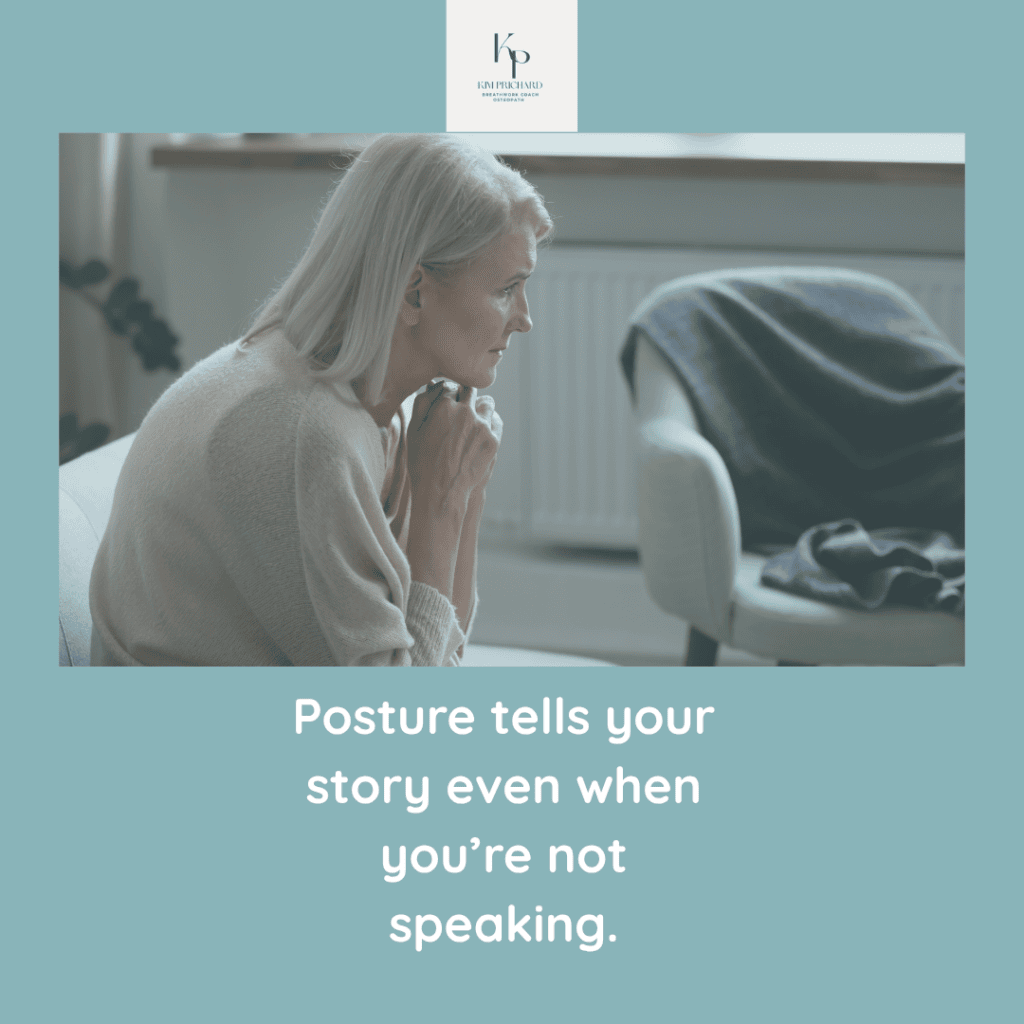
We often think of posture in purely physical terms: shoulders back, chest lifted, spine straight. But posture is far more than a matter of biomechanics. It is the living expression of our emotional life, nervous system regulation, and the history we carry within.
The Body as Biography
Posture is not static. It adapts to how we feel, what we’ve lived through, and how safe we feel in the world. Someone with a history of trauma or chronic stress may unconsciously contract, shrink, or collapse inward. Another may brace and harden, holding tension as a protective strategy. These patterns can persist long after the original stressor has passed.
Our body tells our story, even if we’re not speaking a word.
The Nervous System’s Influence
At the heart of this relationship is the autonomic nervous system (ANS) the part of the nervous system responsible for regulating involuntary functions like heart rate, digestion, and stress response.
The ANS has two main branches:
- Sympathetic (fight or flight) Often reflected in a hyper-alert posture: tight jaw, raised shoulders, shallow breath, rigid spine, flared ribs.
- Parasympathetic (rest, digest, freeze) This can manifest in a collapsed or withdrawn posture: rounded shoulders, sunken chest, lowered gaze, minimal movement.
If we live in a state of chronic sympathetic activation (from pressure, trauma, or unresolved emotions), the body adapts to that stress and posture shows it. Likewise, if we’ve spent extended periods feeling helpless or shut down, our tissues may mould to a pattern of collapse. Obviously, it is not only the nervous system, there are structural adaptations, connective tissue properties, mechanical limitations and load histories at play too, which need to be taken into consideration.
Emotional Imprints in the Body
Emotions are not just felt, they are embodied. Grief might show up as a heavy chest, anxiety as a forward-thrust head, and shame as a rounding of the upper spine. Over time, repeated emotional responses create structural patterns. The fascia, muscles, and breath adapt accordingly.
For example:
- A child who learns to “stay small” to avoid conflict might develop a habitual inward posture.
- A person who must “keep it together” for others may hold tension in the diaphragm or jaw, unconsciously restricting breath and voice.
Breath, Posture, and Release
Breathwork is one of the most direct ways to soften and re-pattern these postural stories. Because breath links the conscious and unconscious, the physical and emotional, working with it allows us to gently access the deeper layers of what the body holds.
Through breath:
- We can regulate the nervous system.
- We can create spaciousness in areas of chronic tension.
- We can uncover and integrate the emotional experiences held in our tissues.
As posture shifts, so does our felt sense of identity. A lifted sternum can change how we speak and show up in the world. A relaxed belly can create access to safety and joy.
Rewriting the Story
Awareness is the first step. Begin to notice:
- Where do you collapse or brace?
- How does your posture change with different emotions or situations?
- What would it feel like to inhabit your body in a more spacious, grounded way?
By gently working with posture through breath, touch, mindful movement, and nervous system education, we begin to reclaim the parts of us that have been hidden, protected, or silenced.
Because posture doesn’t lie.
It tells the truth of what we’ve been through and it can also point the way forward, toward greater ease, connection, and wholeness.