Breathing, Sleep, and the Nervous System Explained

As we approach World Sleep Day on March 14, it’s the perfect time to explore why so many people struggle with sleep and how something as simple as breathing can make all the difference.
The Global Sleep Problem
You are not alone if you have trouble sleeping:
- 62% of adults worldwide say they don’t sleep as well as they’d like.
- 44% say their sleep quality has worsened in the past five years.
- Only 10% report sleeping very well.
Many common sleep issues , such as insomnia, snoring, and sleep apnea, are directly linked to how we breathe. Dysfunctional breathing fuels stress, disrupts sleep, and can even contribute to airway obstruction at night. The good news? You can retrain your breathing for better sleep.
How Breathing Affects Sleep
The way you breathe during the day impacts how well you sleep at night. Mouth breathing, over-breathing, and upper chest breathing keep the body in a state of stress, making it harder to fall and stay asleep.
When you breathe too fast or through your mouth, it activates the sympathetic nervous system (your fight-or-flight response). This can lead to:
- Increased snoring and airway obstruction
- Lower oxygen levels and reduced nitric oxide production (which help keep airways open)
- Disrupted CO₂ balance, making deep sleep harder to achieve
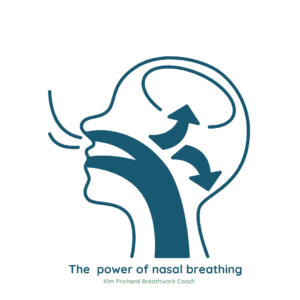
Breathing through your nose is a remarkably powerful practice.
The Power of Nasal Breathing
By switching to slow, nasal breathing, you activate the parasympathetic nervous system (your rest-and-digest mode), helping you sleep more soundly. Here’s why nasal breathing is beneficial:
- Lowers heart rate & blood pressure
- Enhances relaxation & oxygen delivery
- Supports CO₂ balance, optimizing oxygen release (Bohr Effect)
- Stimulates the vagus nerve, calming the nervous system
- Boosts nitric oxide production, which keeps airways open
- Reduces snoring & sleep apnea
The solution? Train yourself to breathe through your nose – day and night.
Breathing Techniques for Better Sleep
To fall asleep faster and improve sleep quality, it’s essential to slow your breathing before bed. This helps signal relaxation and prepares your body for deep, restorative sleep.
A Simple Bedtime Breathing Exercise
1.Close your mouth and breathe gently through your nose.
2️. Focus on the airflow as it enters and leaves your nostrils.
3️. Soften your breath—slow your inhalation and allow for a relaxed, gentle exhalation.
4️. Reduce your breath volume until you feel a light air hunger (a slight desire for more air). This helps trigger relaxation.
5️. Continue for 15 minutes before bed. If you wake up during the night, repeat the exercise.
If you know someone who struggles with sleep, share this article. Download my free breathe with me audio and /or video. You can also contact me for a 1-2-1 or private group session to learn to breathe and sleep better.
*Source: Thanks to Oxygen Advantage for providing this key information which has be edited for #WorldSleep Day.