Harnessing the Power of Breathwork for Mental Health: A Focus for Mental Health Awareness Month

May is Mental Health Awareness Month, therefore I didn’t want the month to end before taking the time to share how breathwork is a powerful tool to reduce stress and anxiety. Here I hope to provide a conscious overview of how controlled breathing can positively impact mental health and offer some suggestions about how to incorporate these techniques into your daily routine.
Understanding the Impact of Breathwork
Breathwork encompasses various techniques that focus on conscious control of breathing. Historically rooted in practices like yoga (pranayama)
, breathwork has been scientifically validated to benefit both mental and physical health. Here's how:
Activating the Parasympathetic Nervous System: Conscious breathing techniques can activate the parasympathetic nervous system, which induces a "rest and digest" state. This helps counteract the body's "fight or
flight" response, reducing stress levels and promoting relaxation (www.heart.org).
Reducing Anxiety and Depression: A comprehensive meta-analysis found that breathwork si
gnificantly reduces symptoms of anxiety and depression. Techniques like cyclic sighing—where a deep breath is followed by a prolonged exhalation—are particularly effective in stabilizing mood and fostering a sense of calm (PsyPost - Psychology News).
Improving Physiological Health: Beyond mental health, controlled breathing can positively affect physical health parameters. Studies have shown improvements in blood pressure and blood glucose levels, illustrating the broad health benefits of regular breathwork practice (www.heart.org). Additionally, nasal breathing aids in the effective use of CO2, which helps balance our physiological processes and the autonomic nervous system."
Which Techniques to Use?
There are many practical breathwork techniques you can try, including Cyclic Sighing and Box Breathing. However key to all effective breathing techniques is inhaling and exhaling through the nose. Therefore this is the initial focus of all of my breathwork programmes and workshops.
The second key factor is to make sure you incorporate breathwork into your daily life. This can be done by setting aside a dedicated time each day to focus on your breathing, for example, first thing in the morning and last thing at night. Additionally, you can bookmark one of my breathwork reminders that can be found on my Instagram page, to help guide and focus.
Final Thoughts
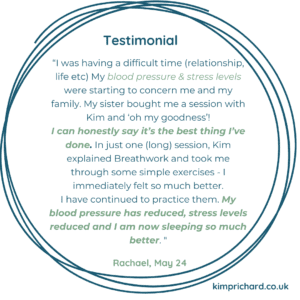
Customer Testimonial
As we raise awareness about Mental Health this Month, it’s essential to explore all available tools to support mental
wellbeing. Breathwork is a simple yet powerful practice that can help manage stress, reduce anxiety, and improve overall mental health. By incorporating these techniques into your daily life, you can take proactive steps toward better mental health and wellbeing.
For more detailed information on the benefits of breathwork, check out the American Heart Association's insights on the physiological and mental health benefits of controlled breathing (www.heart.org) and the comprehensive meta-analysis on breathwork's impact on stress and mental health (PsyPost - Psychology News).
If you want to learn how to breathe to support your wellbeing, sign up now for my online class starting in June.
Sources:
American Heart Association. "It's not just inspiration – careful breathing can help your health." https://www.psypost.org/breathwork-shows-promise-in-reducing-stress-anxiety-and-depression-according-to-new-meta-analysis/
[…] Furthermore, the deliberate activation of the diaphragm also stimulates the vagus nerve, promoting a state of calm and reducing the body’s stress response. It is this powerful link to reducing anxiety levels’ improving emotional regulation and enhancing emotional resilience, that I explored in last month’s blog “Harnessing the Power of Breathwork for Mental Health”. […]