The Art of Sitting: A Guide to Optimal Sitting Posture for Wellbeing

One thing we often overlook is the impact of the way we sit and for how long on our overall wellbeing. As an experienced osteopath, I’ve witnessed first-hand the importance of proper sitting posture for our musculoskeletal health. Imagine your body as a finely tuned machine – when we sit with awareness and intention, we optimise its functionality.
So, what does it mean to sit properly?
Picture this: spine aligned, shoulders relaxed, feet flat on the ground (hips placed higher than your knees). This isn’t just about appearances; it’s about creating a foundation for your body to thrive. When we maintain an ergonomic sitting position we support the natural curves of our spine, reducing the risk of musculoskeletal issues and promoting better overall health.
The impact of not sitting properly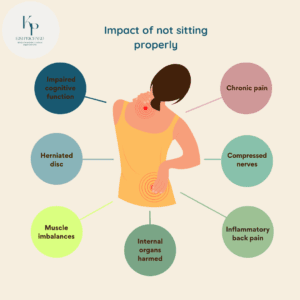
The downsides of improper sitting are more than just discomfort in the back. Slouching or hunching over time can lead to chronic pain, muscle imbalances, and even affect our internal organs. It places undue stress on the spine leading to issues such as herniated discs and compressed nerves. Moreover, poor posture can impact digestion, breathing, and circulation, affecting our energy levels and cognitive function.
Guidelines to sitting properly
To avoid these pitfalls, make a conscious effort to sit properly. Listed below are several tips:
- Invest in a chair that supports the natural curves of your spine.
- Keep your feet flat on the ground and hips positioned higher than your knees.
- Make sure your computer is placed centrally and at direct eye level. So not at an angle or where you need to look down or up to see it.
- Take regular 5 – 10 minute breaks to stretch and move throughout the day. For example, schedule 5-minute walks every hour.
- Consider using lumbar support or ergonomic cushions to help you sit correctly.
- If possible swap to a standing desk.
- Learn to breathe correctly, using your diaphragm and extending your ribs, as this encompasses micro-movements that support your digestion, protect your lower back and neck and help to reduce your stress levels. When you consider we breathe approximately 20,000 times a day, breathing correctly or incorrectly can have a huge impact.
- Your eyes are linked to your neck muscles so ensure you regularly broaden and extend your vision by looking outside or in the distance.
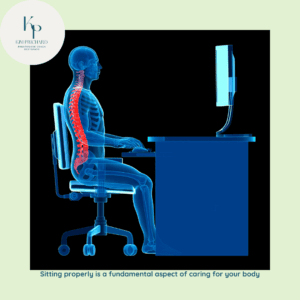
Remember, the art of sitting goes beyond appearances, it’s a fundamental aspect of caring for your body. By adopting proper sitting habits, you not only prevent discomfort but also pave the way for a healthier, more vibrant you. Your body will thank you for the investment in good posture and you will reap the rewards in the form of improved overall wellbeing.