The Diaphragm: The Cornerstone to Wellbeing

As both an Osteopath and a Breathwork Coach, I’ve developed a profound appreciation for the diaphragm. Nestled beneath your lungs, this dome-shaped muscle is essential not only for effective respiration but also for maintaining overall body health. In this article, I’ll explore the diaphragm’s crucial role in both breathwork and osteopathy. My goal is to share why I speak so enthusiastically about this muscle and, more importantly, to help you understand its significance in our overall wellbeing.
What and where exactly is the Diaphragm
The diaphragm is a thin, muscular partition separating the thoracic cavity from the abdominal cavity. When you inhale, it contracts and flattens, creating a vacuum that pulls air into your lungs. Exhaling allows it to relax and return to its dome shape, pushing air out. Beyond its role in breathing, it also supports posture and spinal stability, acting as a core muscle that aids in maintaining balance and movement efficiency.
Physiological Benefits of Employing Diaphragm during Breathwork.
When teaching breathwork, central to the philosophy is breathing in through your nose and ensuring you are expanding your rib cage, fully engaging your diaphragm to ensure you expand your lungs. This technique maximizes oxygen uptake and promotes efficient gas exchange.
Research has shown that employing a diaphragm during breathwork can significantly improve oxygenation and enhance relaxation. A study published in Frontiers in Psychology found that this form of breathing reduces stress and increases attention span.
Furthermore, the deliberate activation of the diaphragm also stimulates the vagus nerve, promoting a state of calm and reducing the body’s stress response. It is this powerful link to reducing anxiety levels’ improving emotional regulation and enhancing emotional resilience, that I explored in last month’s blog “Harnessing the Power of Breathwork for Mental Health”.
Additionally, when functioning well, the diaphragm aids in rib and thoracic mobility, which can help reduce the incidence of back and neck pain.
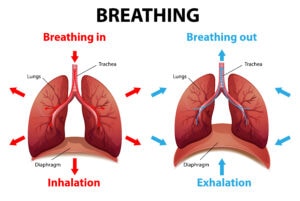
Employing the diaphragm during breathing can significantly improve oxygenation and enhance relaxation. Image: freevector
The Diaphragm’s Role in Supporting Musculoskeletal Health
As an experienced Osteopath, I understand how pivotal the diaphragm’s role is in maintaining the health of the musculoskeletal system. It influences the musculoskeletal system by supporting the spine and affecting posture. Poor diaphragm function can have widespread and significant effects throughout the body. Its connections to the pelvic floor, psoas, and quadratus lumborum muscles link via muscle chains and fascial connections all the way to the foot. Similarly, it connects upward to the heart and throat area, further demonstrating its extensive influence on overall body function. According to a review in the Journal of Multidisciplinary Healthcare, the diaphragm’s interaction with the core muscles helps maintain proper alignment and movement efficiency.
Osteopathy allows me to treat and enhance the body’s function. By focusing my work on the diaphragm, I have improved breathing patterns, reduced tension, and enhanced client’s overall bodily function. My own practical experience has been reflected in studies that have shown that Osteopathic treatment can positively affect diaphragm function, leading to better respiratory efficiency and relief from musculoskeletal discomfort.
Integrating Breathwork and Osteopathy
Therefore combining breathwork with osteopathic treatments offers synergistic benefits. Diaphragmatic breathing can enhance the effects of Osteopathic practice by ensuring that the diaphragm and related structures are functioning optimally. This integration can lead to improved posture, reduced pain, and enhanced overall health.
In Summary
The diaphragm is more than just a muscle for breathing; it’s a cornerstone of our physical and mental health. Hence why I am so passionate about it, as through helping clients access a better understanding of how to breathe more functionally and where needed using osteopathic treatment /movement, we can unlock its full potential, leading to a healthier, more balanced life.
Therefore take a moment to consider how you use your diaphragm, how you can potentially engage in either or both these practices, and experience the profound benefits they offer for your body and mind.
Sources:
https://medcraveonline.com/MOJSM/MOJSM-07-00155.pdf
https://www.jstage.jst.go.jp/article/jsatj/5/1/5_27/_article/-char/en